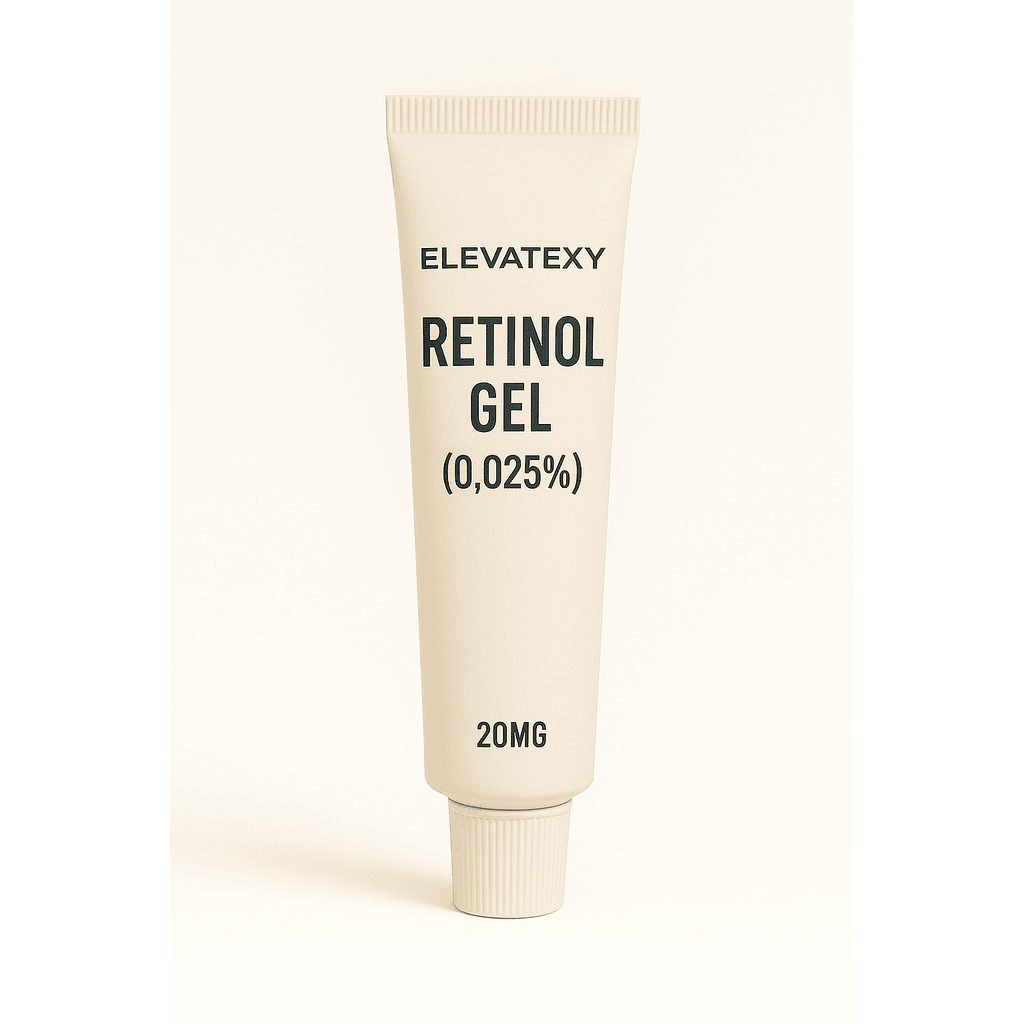
10 in stock (can be backordered)
Pharmacological Class:
Retinol Gel contains tretinoin, a retinoid, which is a derivative of vitamin A. Retinoids are widely used in dermatology for their ability to affect cell growth and differentiation. Tretinoin is particularly known for its ability to regulate the growth and turnover of skin cells, making it highly effective for treating acne, reducing fine lines, and improving skin texture. It is considered a first-line therapy for acne and is also used in the treatment of photodamage (sun damage) and other signs of aging.
Mechanism of Action:
Tretinoin works primarily by promoting the rapid turnover of skin cells (keratinocytes) and normalizing the shedding process, which helps prevent the formation of comedones (blocked hair follicles) that lead to acne. By encouraging cell turnover, Retinol Gel helps clear up existing acne lesions and prevents the formation of new ones. Additionally, tretinoin works by increasing collagen production in the skin, which can reduce the appearance of fine lines, wrinkles, and skin sagging. It has a mild exfoliating effect that helps to improve skin texture, tone, and smoothness. Tretinoin also helps with hyperpigmentation (such as dark spots or melasma) by promoting the turnover of skin cells in hyperpigmented areas.
Indications:
Retinol Gel is primarily used for the topical treatment of acne vulgaris. It is effective in treating both inflammatory and non-inflammatory acne, including blackheads, whiteheads, and pimples. Additionally, Retinol Gel is used to reduce signs of photoaging (sun damage), such as fine wrinkles, dark spots, and skin roughness. It may also be used in the treatment of hyperpigmentation, such as melasma, and to improve overall skin texture and appearance. In some cases, tretinoin is used off-label to help with the treatment of stretch marks, although the effectiveness for this purpose may vary.
Dosage Form:
Retinol Gel is available as a topical cream or gel, typically in concentrations of 0.025% or 0.05%. The cream is usually packaged in a 20g tube and is applied to the skin in small amounts. The medication is applied directly to the affected area of the skin, typically once daily before bedtime. The cream should be applied to clean, dry skin, and a thin layer should be used to avoid excess irritation. It is important not to apply the cream to sensitive areas such as the eyes, mouth, or mucous membranes. Retinol Gel should be used as part of a regular skincare regimen, and it is essential to follow the instructions provided by a healthcare professional for the best results.
Typical Dosage:
For acne treatment, Retinol Gel is typically applied once daily to the affected areas, preferably at night, to reduce the risk of irritation from sun exposure. In the case of photodamage or signs of aging, it is also applied once daily, typically in the evening. It is important to begin with a lower concentration of the medication (usually 0.025%) to assess skin tolerance, and the dose can be gradually increased if needed. Overuse of Retinol Gel can lead to excessive dryness, irritation, or peeling, so it is important to follow the prescribed dosage and avoid applying large amounts.

At ElevateXY, we believe optimal health and performance begin with the right support. That’s why we offer a carefully curated range of supplements and vitamins crafted to meet the highest industry standards.
Subscribe to our newsletter and never miss an update!
Copyright © 2025 ElevateXY| Designed by Aizaz